Procurement guide · Rotary Evaporator
Ordering an Explosion-Proof Rotary Evaporator Online: RFQ Essentials
Buyers researching where to order explosion-proof rotary evaporator online need more than a nominal flask size and a listing price. A useful request for quotation connects the actual solvent batch, available electrical supply, heating and cooling conditions, and required explosion-protection documentation to a specific equipment configuration.
Where to order an explosion-proof rotary evaporator online: start with a technical RFQ
On ZZKEDA, begin with the explosion-proof rotary evaporator options and submit an application-specific inquiry. Treat the product page as a starting point for selection, not as evidence that every possible pump, chiller or control arrangement meets the site's hazardous-area requirements.
Before ordering, ask for an itemized proposal identifying the offered model, evaporating flask, receiving flask, condenser arrangement, rotation and lift mechanisms, heating system, vacuum control and external cooling equipment. The proposal should also identify which components are intended for installation inside the classified area and which, if any, are located outside it.
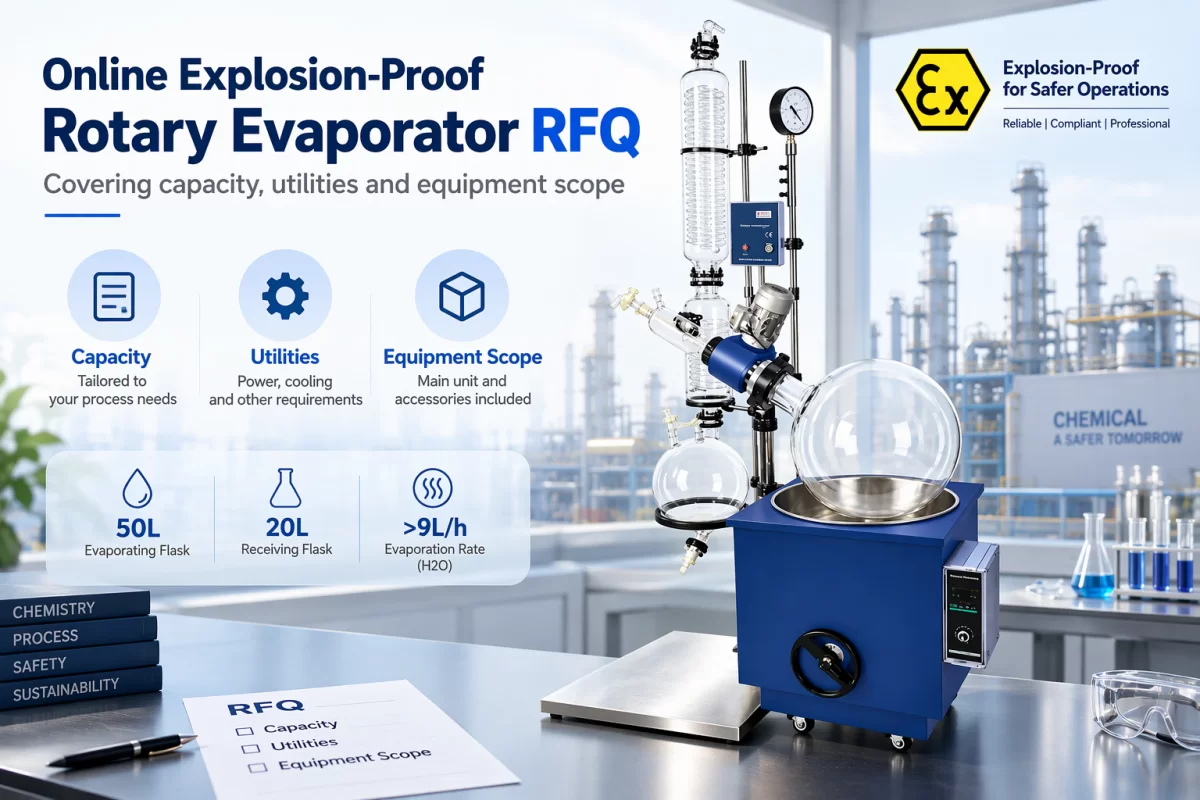
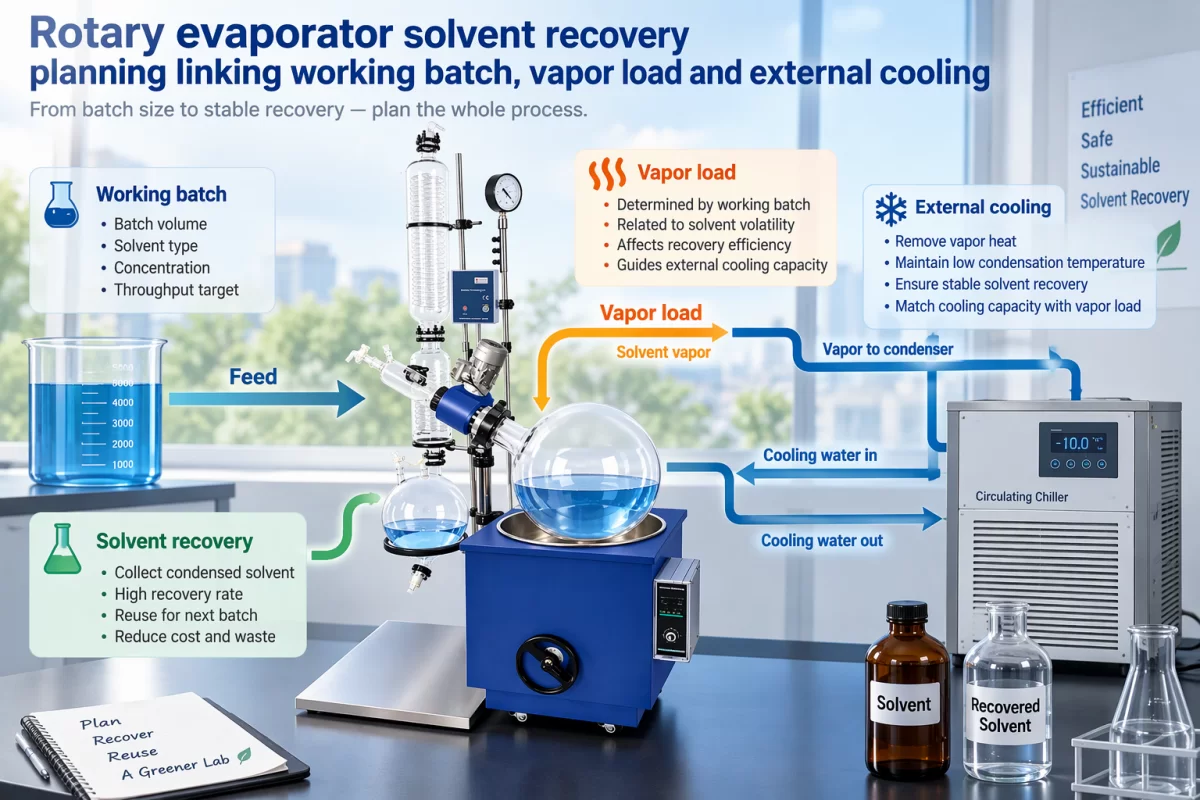
Specify the working batch—not just the flask volume
State the starting liquid volume per batch, intended solvent removal, final concentrate volume and available processing time. Include whether the process uses one initial charge or controlled replenishment. Foaming, viscosity, suspended solids and bumping tendency can affect usable loading and operation; nominal bottle volume alone does not resolve these questions.
The following R-series bottle capacities provide a model-specific starting point for capacity discussions. These values describe the listed models, not explosion-protection approval or guaranteed throughput.
| Model | Evaporating bottle (L) | Receiving bottle (L) | Lifting travel (mm) |
|---|---|---|---|
| R1005 | 5 | 3 | 0–150 |
| R1010 | 10 | 5 | 0–160 |
| R1020 | 20 | 10 | 0–190 |
| R1050 | 50 | 20 | 0–180 |
Compare candidate configurations using the same solvent composition, starting batch, feed method, bath temperature, operating pressure and coolant conditions. Receiving-bottle volume also affects collection planning: usable collection volume and the method for emptying the receiver must be considered separately from its nominal capacity.
Provide solvent, power, heating and cooling conditions
Send the solvent names, approximate composition, safety data sheets and relevant material characteristics. For extraction liquids, describe the rotary evaporator's task as solvent recovery or concentration. That application does not establish direct extraction capability, selective refinement of target compounds or pharmaceutical production grade.
- Electrical supply: Give site voltage in V, frequency in Hz, single- or three-phase supply, grounding requirements and available circuit capacity. Request separate electrical requirements for the main unit, pump and chiller.
- Heating: State the intended bath medium, normal bath temperature, maximum acceptable product temperature and required control functions. Request the offered heater rating, operating limits and overtemperature protection.
- Vacuum: Specify the target operating pressure and whether it is absolute or gauge pressure. Describe the required control method, vapor compatibility and pump exhaust handling; ultimate vacuum alone is not a process-control specification.
- External cold source: Provide available coolant temperature, flow, coolant type and ambient conditions. If a chiller is required, request cooling capacity at the intended operating temperature—not only its lowest achievable temperature.
- Mechanical operation: Request the offered rotation range, speed-control method, lift type and clearance requirements. Establish how the flask is raised from the bath during normal operation and an interruption.
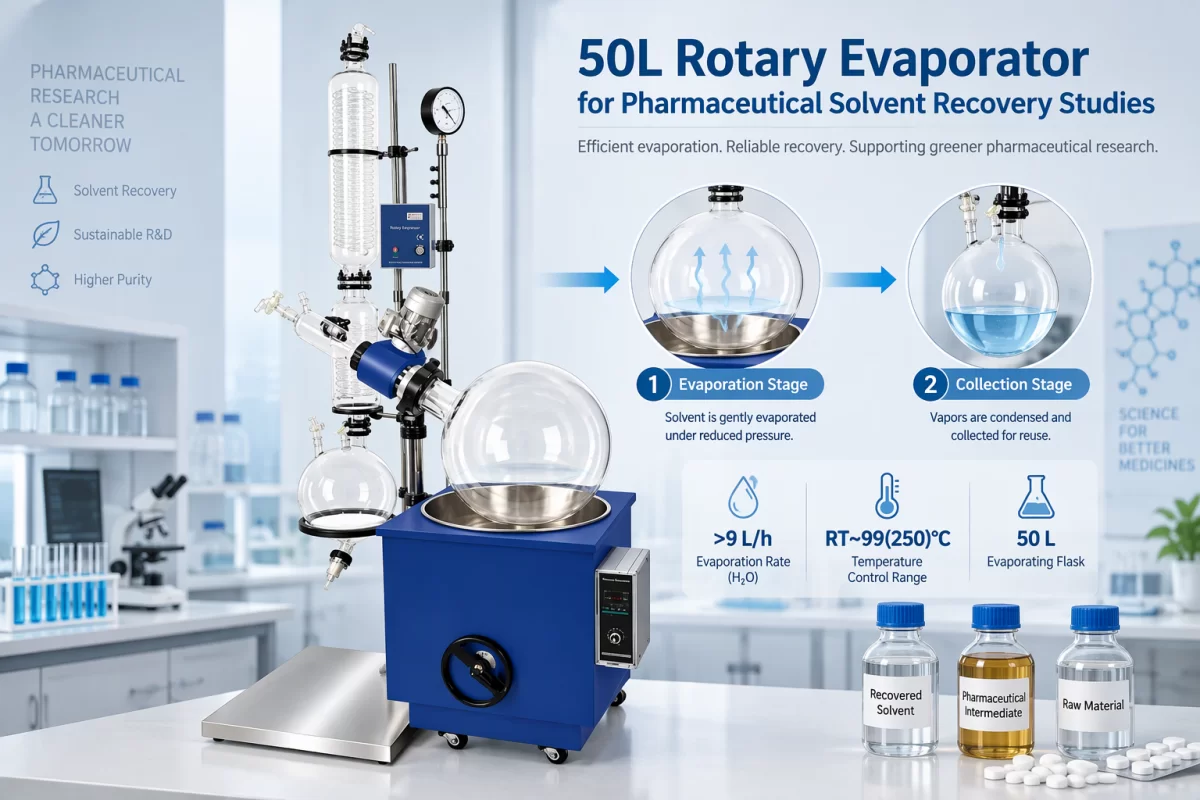
Review rotary evaporator parts and applications when organizing the inquiry, then obtain the actual component specifications for the proposed model. Condenser geometry, vapor-path connections and coolant requirements should be stated in the quotation.
Check explosion protection component by component
Include the installation country's requirements and the site's hazardous-area classification, relevant gas group, temperature class and ambient conditions, as determined by the responsible site specialist. Solvent names alone do not establish which protection measures or approvals are suitable.
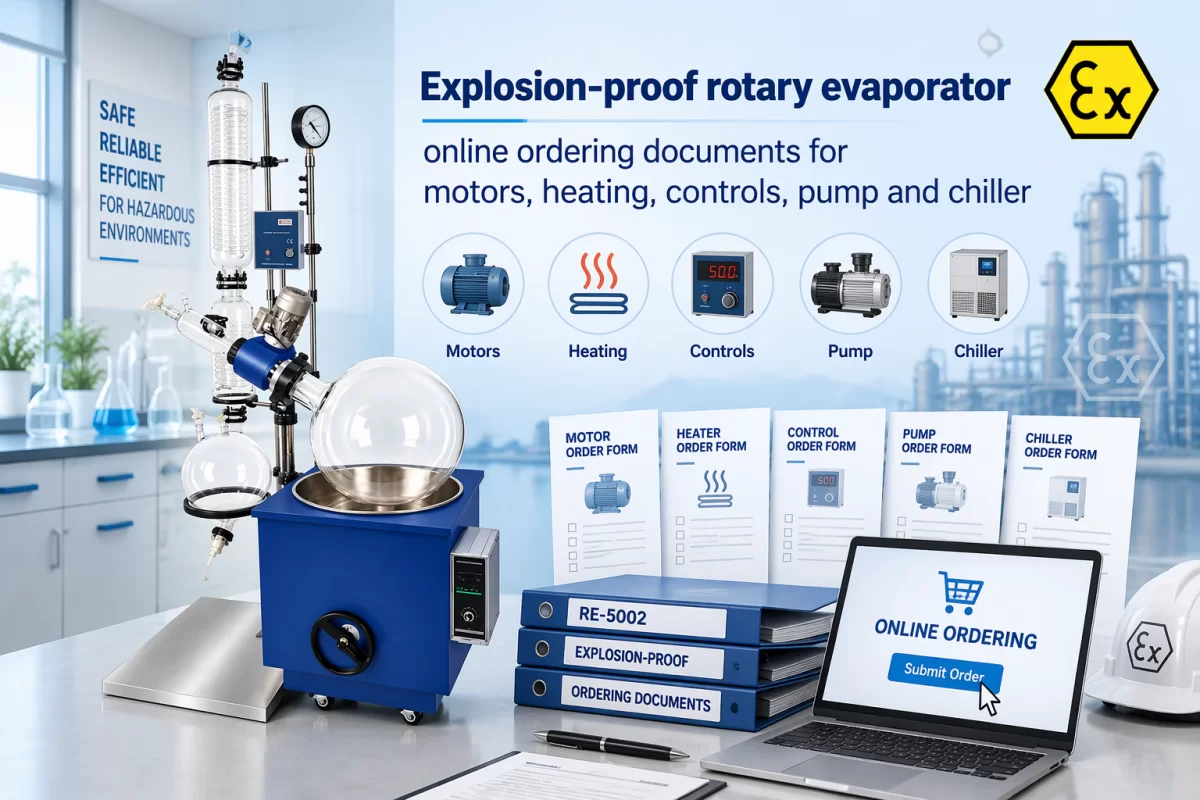
Request documentation separately for the rotating motor, powered lifting mechanism, bath heater, sensors, control enclosure, switches, vacuum pump and chiller. The documents should identify the exact equipment covered, applicable markings, installation conditions and any limitations. Where system-level certification is required, obtain evidence covering the supplied assembly and its intended installation.
Have the site's qualified safety and electrical personnel review the proposed arrangement before purchase. Equipment placement, bonding and grounding, ventilation, exhaust routing and installation practices remain part of the overall safety decision.
Separate package scope from the reference price
Ask for separate quotation lines rather than assuming “rotary evaporator” means a complete working system. Use the same scope when comparing quotations:
- Main unit: Identify the flasks, condenser, bath, rotation drive, lift, seals and included controls.
- Vacuum pump and controller: State their models, solvent compatibility, control functions and exhaust accessories.
- Chiller: Identify cooling duty, electrical supply, coolant and connection requirements.
- Cold trap: State whether supplied, how it is cooled and the intended vapor-protection role.
- Pipework and fittings: List vacuum tubing, coolant hoses, valves, adapters and installation materials.
- Services: Separate packing, freight, installation assistance, commissioning, training, spare parts and warranty terms.
Our company's reference price is US$1,480. This is a company catalog reference, not a quotation for a documented explosion-proof system or an automatically complete package. The actual quotation depends on the selected configuration and RFQ results.
For budgeting context, see rotary evaporator package costs. Evaluate offers against the same equipment list, process duty, protection requirements and service scope.
The document list for a remote rotary evaporator RFQ
Attach the material safety data sheets, a brief process description, site electrical details and hazardous-area requirements. A layout sketch should show available floor space, access clearance, utilities and proposed locations for the pump and chiller.
Request a model-specific specification sheet, equipment layout, connection diagram, itemized bill of supply, relevant explosion-protection documents, operating manual and service terms. Where throughput matters, request an evaluation or test proposal using agreed material and operating conditions, with the measurement basis clearly stated.
Copy-ready inquiry outline
Application: solvent recovery or concentration; material: solvent composition and SDS; working batch: starting volume and final target; processing goal: solvent removal per batch and available time; feeding: initial charge or replenishment; conditions: bath temperature, product limit, operating pressure and coolant supply; power: voltage, phase and frequency; installation: area classification and applicable requirements; package: main unit, pump, chiller, cold trap, hoses and services; delivery: destination and required schedule.
Order online with a defined process and documented configuration
The practical answer to where to order an explosion-proof rotary evaporator online is to start with a relevant product inquiry and progress to a model-specific, itemized proposal. Select flask capacity around the working batch, match heating and cooling to the solvent load, specify vacuum control, and assess explosion protection across the complete supplied configuration.
Submit the material composition, target processing amount or working batch, operating conditions, site power supply and required package components. These details provide the basis for evaluating a suitable rotary evaporator arrangement and preparing a configuration-specific quotation.