What is a bioreactor?
Bioreactor mainly refers to the production experimental equipment used for cell culture, pharmaceutical production, animal and plant tissue culture, microbial fermentation production, biological product preparation, sewage treatment and other experiments, and production to provide a reaction environment. reactor. Lab bioreactor are cheap, welcome to inquire.
The principle of bioreactor:
Lab bioreactor usually refer to the use of enzymes (promoted by one or a group of enzymes) or organisms (such as microorganisms) to make the device have the function of simulating organisms, which can carry out biochemical reactions outside the cell, and can be carried out during the simulation process. Aerobic reactions can also be carried out anaerobic reactions. These systems are quite important devices in applications such as alcohol, tissue engineering, biochemical engineering, pharmaceutical production, and organic pollutant degradation.
The composition of the bioreactor:
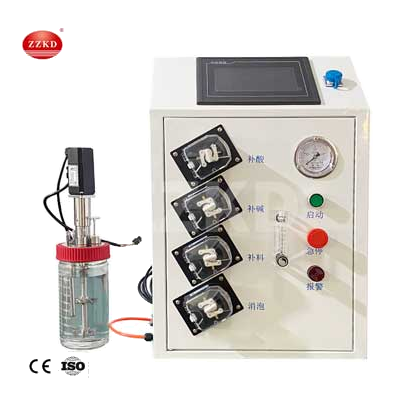
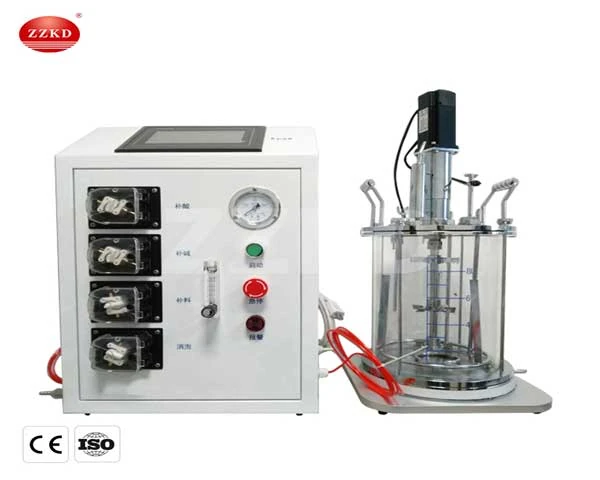
A lab scale bioreactor consists of a touch screen, peristaltic pump, pressure gauge, motor, flow meter and fermenter,
1. Large touch screen: large color touch screen with simple interface and easy operation.
2. Borosilicate glass tank: The tank body is made of high temperature and corrosion resistant borosilicate glass, which can visually observe the state of the tank body.
3. Peristaltic pump: The peristaltic pump is easy to load, and the 4 fixed-speed peristaltic pumps can be directly used for the control of acid supplementation/alkali supplementation/sterilization/defoaming.
4. Motor DC motor, mechanically stirring, gear transmission, mechanical seal
The operating steps of the bioreactor:
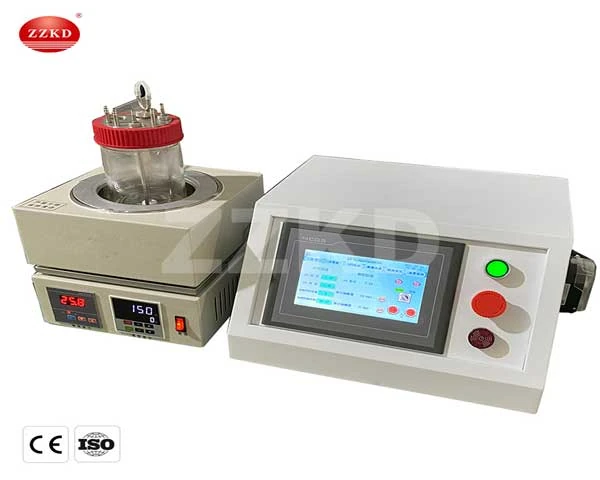
1. Lay the stirring motor of the laboratory bioreactor flat on the desktop, and wrap the motor interface with tin foil, which can prevent the sterilization process from falling off and avoid the damage to the motor interface caused by the high-temperature steam generated during high-pressure steam sterilization.
2. Remove the temperature sensor of the bioreactor. The temperature sensor does not need to directly contact the fermentation broth, so sterilization is not required.
3. Install the pH electrode: Tighten the upper and lower fixed nuts of the electrode, wrap the interface with tin foil and tie it with a rubber band to prevent it from falling off during the sterilization process, and calibrate it before sterilization.
4. Install the DO electrode: Tighten the upper and lower fixed nuts of the electrode, wrap the DO electrode cable interface with tin foil and bind it with a rubber band to prevent the sterilization process from falling off and affecting the performance of the electrode; before sterilization, pay attention to whether the electrolyte is still there. .
5. Insert the defoaming or liquid level cable to the bottom, and position it to the required height after sterilization. The defoaming electrode needs to be about 1.5cm away from the liquid surface.
6. Remove the cooling water inlet and outlet pipes on the bioreactor and the inlet and outlet pipes on the condenser. After removal, use clips to clamp the joints to prevent water from flowing out.
7. Remove the air pipe and clamp the intake pipe with a hose clamp. The silicone pipe and the air filter are sterilized together with the glass jar. The exhaust port is also clamped with a hose clamp, and then put the silicone pipe and the exhaust filter together. Sterilizer.
8. Use hose clamps to clamp the panel end of the harvest tube, spare nozzle.
9. Adjust the position of the stirring blade before sterilization. The stirring blade should be installed at the bottom of the stirring shaft as much as possible, and the upper stirring blade should be adjusted to the middle position of the added fermentation liquid.
10. Before sterilization, tighten the six retaining nuts of the bioreactor.
11. Before sterilization, the flame inoculation port must be loosened to prevent the pressure difference between the inside and outside of the tank from being too large; the sterilization temperature is about 121°C for about 20 minutes; after the sterilization, do not directly touch the fermentation tank, etc. equipment After cooling, you can touch it, and wear protective gloves before operating; after sterilization, tighten the flame inoculation port as soon as possible to prevent bacteria infection.
Features of bioreactor:
1. The lab scale bioreactor is simple in structure, low in cost, easy to control, easy to maintain, easy to solve the problem of anti-corrosion, and has no difficulty in high pressure. It is suitable for medium-speed, slow-speed reactions and reactions with large exothermic heat in which liquid participates in the reaction.
2. The tower is filled with liquid, the gas is introduced from the bottom of the reactor, dispersed into bubbles and rises along the liquid, which not only reacts with the liquid phase, but also agitates the liquid to increase the mass transfer rate. The liquid back-mixing in the tower is serious, and the bubbles are easy to coalesce, so the efficiency is low.
3. Due to its simple structure, the bioreactor is easy to operate, has low operating cost, and has good mixing and mass transfer and heat transfer performance. It is widely used in the bioengineering industry, such as ethanol fermentation, single-cell protein fermentation, wastewater treatment, waste gas treatment (such as treating benzene in the gas phase with microorganisms), etc. Lab bioreactor are cheap, welcome to inquire.